The science behind Disperazol
The need to beat biofilms
Biofilms are one of the most difficult to treat and least understood contributors to severe and recurrent bacterial infection and the subsequent development of antimicrobial resistance.
The biofilm life mode refers to the ability of bacteria to aggregate, collectively adhere to a surface and then create a surrounding protective layer around themselves. This is an effective mechanism that protects the bacteria from the killing action of our existing armoury of broad-spectrum antibiotics that were designed to kill free-moving, planktonic bacteria.

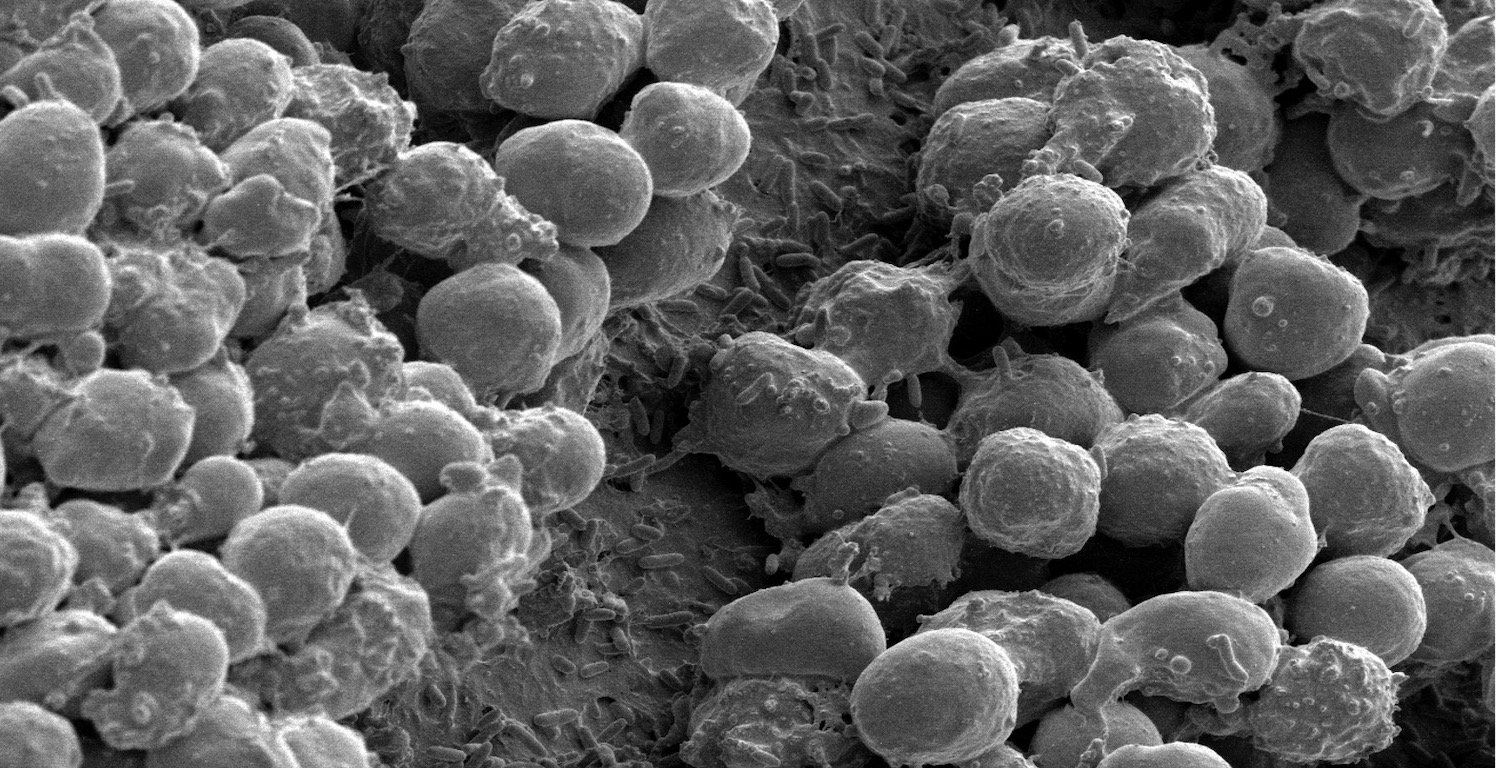
P.aeruginosa biofilm formed on an implant placed in the abdominal cavity of a mouse. The biofilm bacteria are covered by multiple neutrophils of the immune system.
Biofilm-encapsulated bacteria are shielded from the direct effects of existing antibiotics by this protective layer. Once exposed to the specific killing mechanisms of these antibiotics, these bacteria often subsequently mutate to bypass these mechanisms and become resistant to these antibiotics.
Our Focus: dismantling Gram Negative biofilms
We are developing a compound that specifically controls the biofilm life cycle of Gram negative bacteria. It targets the general and key bacterial process of c-di-GMP signalling that controls the biofilm life cycle.
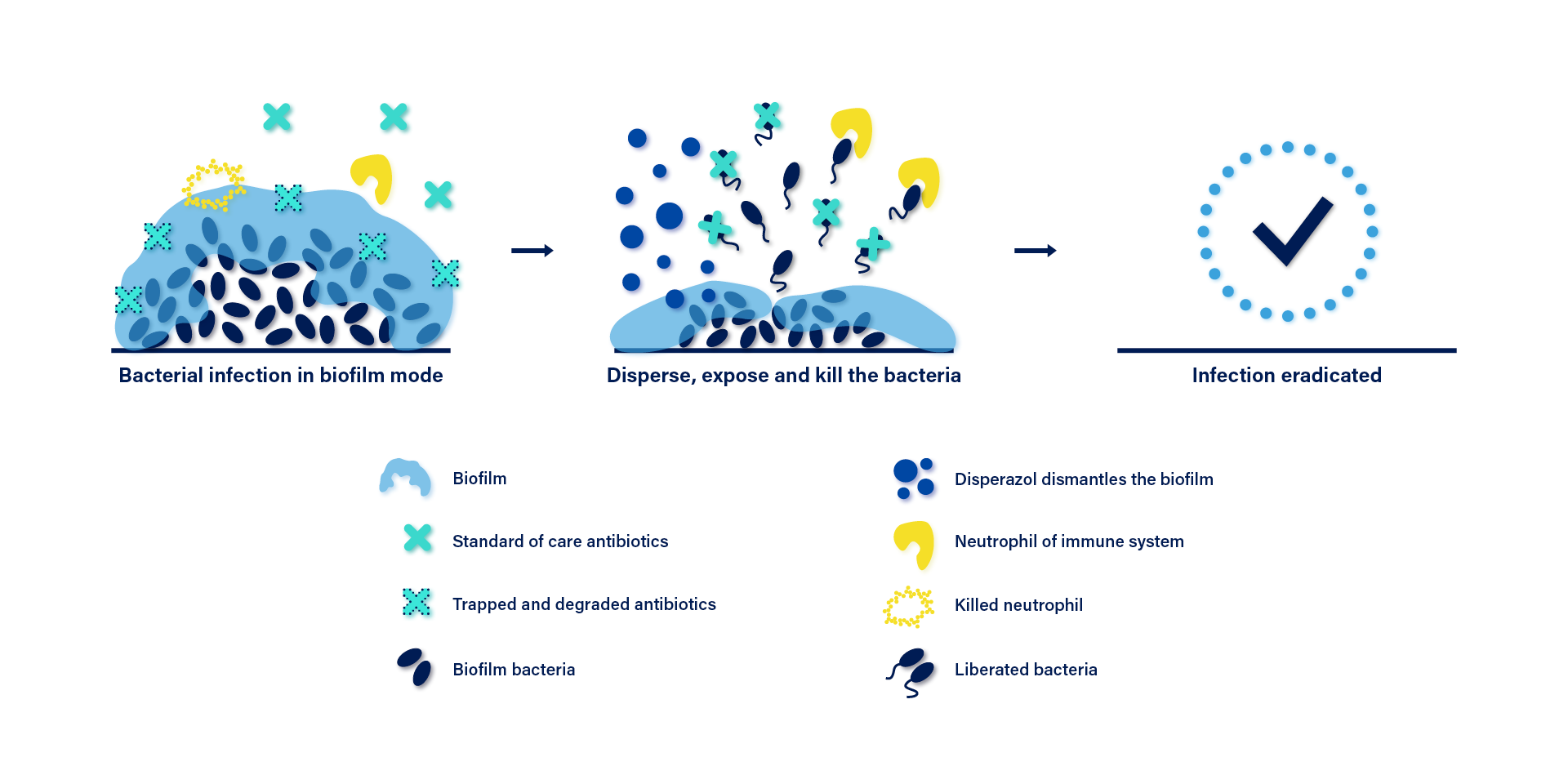
A high level of c-di-GMP drives planktonic bacteria to form biofilms, whereas reduced c-di-GMP levels promote dispersal of biofilm bacteria. This dispersal causes bacteria to assume the planktonic mode of life, thereby rendering them susceptible to direct acting agents. Our approach is to stimulate the activity of a phosphodiesterase which degrades c-di-GMP in Gram negative bacteria resulting in the bacteria losing its protective exopolysaccharide shield and becoming susceptible to be killed by direct acting agents.
Disperazol® activates the PDEs to significantly reduce the intracellular c-di-GMP levels. This signals the bacteria to disperse from the biofilm. The liberated bacteria can be killed by antibiotics and immune cells.